 ZenMalas Blog
If you’re new to meditation and feeling overwhelmed by complex techniques, zen meditation is your perfect starting point. Unlike some formal practices, zen meditation (also called zazen) is rooted in simplicity—its core is about being present, observing your mind without judgment, and finding calm in the here and now. You don’t need special equipment, years of experience, or a spiritual background to start. This simple guide breaks down everything beginners need to know to start zen meditation today, with easy-to-follow steps, practical tips, and answers to common questions.
What Is Zen Meditation, Exactly?
Zen meditation originates from ancient Buddhist traditions, but it’s not tied to any religion or belief system—anyone can practice it. At its heart, zen meditation is a mindfulness practice that focuses on stillness and awareness. It’s not about emptying your mind (a common myth!) but about observing your thoughts and feelings as they come and go, without attaching to them or judging yourself.
Unlike other meditation styles that use mantras, visualizations, or guided scripts, zen meditation is minimal. It relies on your breath and posture to anchor you in the present moment, making it ideal for beginners who want a straightforward, no-fuss practice. The goal isn’t to “achieve” anything—it’s to simply be, exactly as you are, in each moment.
Why Zen Meditation Is Perfect for Beginners

If you’re new to meditation, you might wonder why zen is a better choice than other styles. Here are three key reasons it’s ideal for beginners:
1. It’s Simple (No Fancy Techniques Required)
Zen meditation doesn’t require you to memorize mantras, visualize complex scenes, or follow a guided audio. All you need to do is sit, breathe, and observe. This simplicity removes the pressure of “doing it right” and lets you focus on the practice itself, not the rules.
2. It’s Flexible (Fit It Into Any Schedule)
You don’t need to meditate for 30 minutes a day to benefit from zen. Even 5–10 minutes a day is enough to reduce stress, improve focus, and cultivate calm. This flexibility makes it easy to stick to, even on busy days—perfect for beginners building a new habit.
3. It’s Gentle (No Judgment, Just Awareness)
One of the biggest barriers for beginners is feeling like they’re “bad” at meditation because their mind wanders. Zen meditation embraces this—wandering thoughts are normal, and the practice is about gently bringing your focus back to the present, without judgment. This gentle approach makes it less intimidating and more accessible.
Step-by-Step: How to Practice Zen Meditation as a Beginner
Follow these simple steps to start your zen meditation practice today. Remember: there’s no “perfect” way to do it—focus on comfort and consistency, not perfection.
Step 1: Prepare Your Space
You don’t need a dedicated meditation room—any quiet, comfortable space works. Choose a spot where you won’t be disturbed for 5–10 minutes. Here’s what to do:
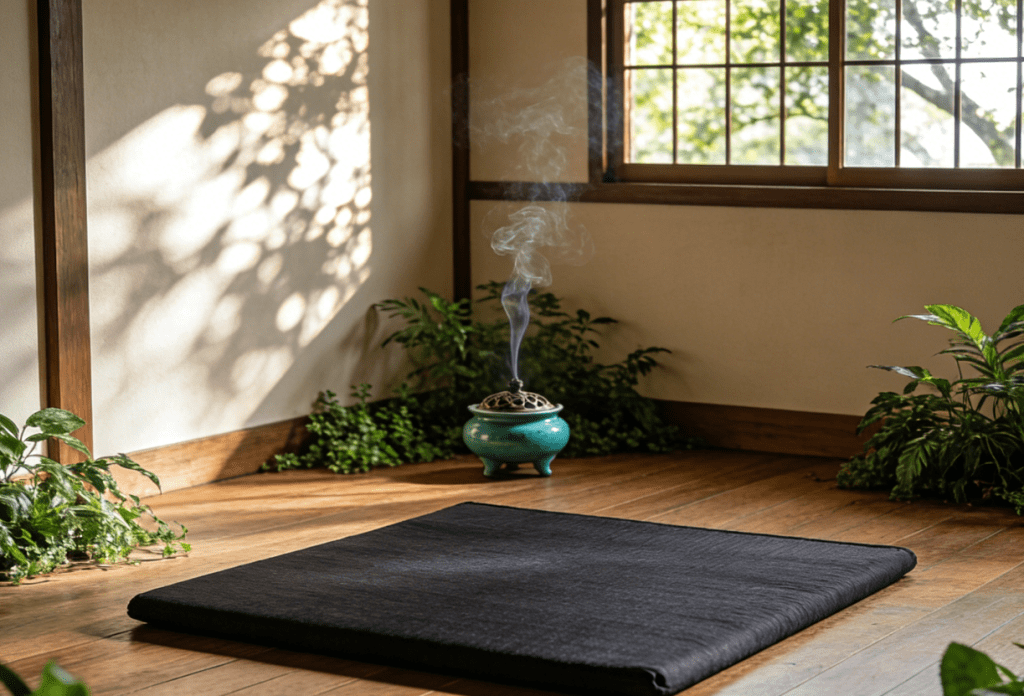
• Find a quiet area: Turn off your phone (or put it on silent), close the door, and minimize distractions (no TV, loud music, or bright lights). • Make it comfortable: Sit on a cushion (a zafu, or even a folded blanket) on the floor, or on a chair with a straight back. The goal is to sit upright but relaxed—no slouching, but no tension either. • Keep it simple: You don’t need candles, incense, or crystals (though you can add them if they help you feel calm). The focus is on you, not your surroundings.
Step 2: Get Into the Right Posture
Posture is key in zen meditation—it helps you stay alert and relaxed. Choose one of these beginner-friendly postures (pick what feels most comfortable):
• Chair Position: Sit on the edge of a chair, feet flat on the floor, knees bent at 90 degrees. Keep your back straight, shoulders relaxed, and hands resting gently on your lap (palms up or down, whichever feels natural). • Cushion Position: Sit on the forward third of a cushion, legs crossed (Burmese style is best for beginners—both feet flat on the floor, knees resting on the ground). Keep your spine straight, chin slightly tucked, and ears aligned with your shoulders. • Kneeling Position: Kneel on the floor with a cushion under your buttocks (to support your knees). Keep your back straight and hands on your lap.
Pro tip: Your eyes can be slightly open (looking at the floor a few feet in front of you) or closed—whichever helps you stay present. Avoid closing your eyes too tightly, as this can make you drowsy.
Step 3: Focus on Your Breath
Your breath is your anchor in zen meditation—it’s what brings you back to the present moment when your mind wanders. Here’s how to do it:
• Take a few deep breaths to settle in: Inhale through your nose for 4 counts, exhale through your nose for 6 counts. This helps calm your body and mind. • Return to natural breathing: After a few deep breaths, let your breath flow naturally—no need to count or control it. Notice the sensation of your breath: the cool air entering your nose, the rise and fall of your chest or belly, the warm air leaving your nose. • When your mind wanders (and it will!): Don’t get frustrated. Simply notice that your mind has wandered, and gently bring your focus back to your breath. This is the practice—repeatedly returning to the present, without judgment.
Step 4: End Your Practice Gently
When your time is up (start with 5–10 minutes), slowly open your eyes (if they were closed) and take a moment to notice how you feel. Stretch gently, wiggle your fingers and toes, and take a deep breath. Carry this sense of calm with you into the rest of your day.
Beginner Mistakes to Avoid
Everyone makes mistakes when starting zen meditation—here are the most common ones, and how to fix them:
Mistake 1: Trying to “Empty Your Mind”
Zen meditation isn’t about emptying your mind—it’s about observing your thoughts without attachment. If you find yourself trying to push thoughts away, stop. Instead, notice the thought, then gently return to your breath.
Mistake 2: Meditating for Too Long Too Soon
Don’t start with 30-minute sessions—you’ll likely get frustrated and quit. Start small (5–10 minutes a day) and gradually increase the time as you get more comfortable.
Mistake 3: Being Too Hard on Yourself
It’s normal for your mind to wander—this doesn’t mean you’re “bad” at meditation. The practice is in the returning, not the perfection. Be kind to yourself, and celebrate small wins (e.g., meditating for 5 minutes straight).
How to Make Zen Meditation a Daily Habit
Consistency is more important than length when it comes to zen meditation. Here are three tips to help you stick to it:
• Choose a fixed time: Meditate at the same time every day (e.g., morning after waking up, evening before bed) to build a habit. • Start small: As mentioned, 5–10 minutes a day is enough. You can increase the time by 2–3 minutes each week. • Track your progress: Use a journal or app to track when you meditate. This helps you stay accountable and see how far you’ve come.
Final Thoughts for Beginner Zen Meditators
Zen meditation is a journey, not a destination. It’s about showing up for yourself each day, even when it’s hard, and embracing the present moment exactly as it is. You don’t need to be perfect—you just need to be present.
Remember: Every time you sit down to meditate, you’re taking a step toward greater calm, focus, and self-awareness. Be patient with yourself, trust the process, and enjoy the journey. Before you know it, zen meditation will become a natural part of your daily life, bringing peace and clarity to even the busiest days.